


November 19, 2025 Meeting Minutes - Abbycare.org, Multiple Neurodivergent Family Members
PALS Meeting Minutes
November 19, 2025 9:30 a.m.
Virtual Meeting using Zoom
Open Forum
Open Forum allows participants to share experiences, ask questions, and provide resources in a mutually supportive setting.
Brenden Lewis, Outreach Coordinator for Abby Care of Pittsburgh joined the meeting and gave us an overview of the services they provide. If you are a parent/guardian/caregiver for a child with a disability, you may qualify for their family Home Health Aide (HHA) program via Pennsylvania Medicaid and get paid for the care you already give. Abby Care currently serves the following counties in the Pittsburgh area: Allegheny, Greene, Washington, Beaver, Mercer, Lawrence, Fayette, Westmoreland, Butler, and Armstrong.
In the state of Pennsylvania, family caregivers of children with special needs and disabilities can get paid to take care of their children through Medicaid.
Training is mandated by Pennsylvania for all Home Healthcare Aides and Abby Care offers:
Bilingual Support
Free of Cost
Community
Flexible Training
Support

Open the full presentation below. *Note: the presentation incorrectly indicates ages 0-20 and should state 5-20.
Contact Brenden Lewis for more information and to get started today;
412.668.5621

Families with Multiple Neurodivergent Members
There was an amazing question in today's meeting that many families can relate to:
Where can a family with multiple neurodivergent members find family therapy in the area?
We all know neurodivergence looks different in different people; two neurodivergent people are not the same. Their needs are different, their triggers are different, their interests are different, and level of care is different.
How does the neurodivergence of one family member impact another?
The family is interested in working together as a unit while best serving the individual growth of each member, through educating the whole family on the different aspects of neurodivergence. These differences may include ASD, ADD, ADHD, and other disorders commonly associated with neurodivergence including (but not limited to) Tourette syndrome, learning disabilities like Dyslexia, Dyscalculia, Dysgraphia, and Dyspraxia, along with intellectual disabilities, Obsessive-Compulsive Disorder, and certain mental health conditions like Anxiety, Selective Mutism, and more.
The thought is by educating the entire family they can work together to support each other's individual needs. Once educated in the specific neurodivergent area, each family member can share their individual needs with the others. Identifying everyone's needs opens the possibility of better support. For instance, the outward behavior caused by the need of one member may actually be a trigger for another. How can the family members work together to support each other in this instance?
Although we left the meeting without answers to the questions, each is extremely important and worth exploring. If you are aware of a therapist or support group in the area specializing in working with families with multiple neurodivergent members, please reach out to PALS.
Possible Leads and Resources

Meeting Topic Survey
Take our suvery and help shape upcoming PALS meetings by sharing what topics you would like to learn more about. *Your email and/or Google account information ARE NOT collected in the process of completing this survey.
PALS Calendar of Events
PALS shares notices for many in-person and virtual events from local, regional, and national organizations, including webinars, support groups, research opportunities, and activities for children and teens. Updated weekly, the PALS Calendar is a valuable resource. Please email your additions to palsfcinfo@gmail.com.
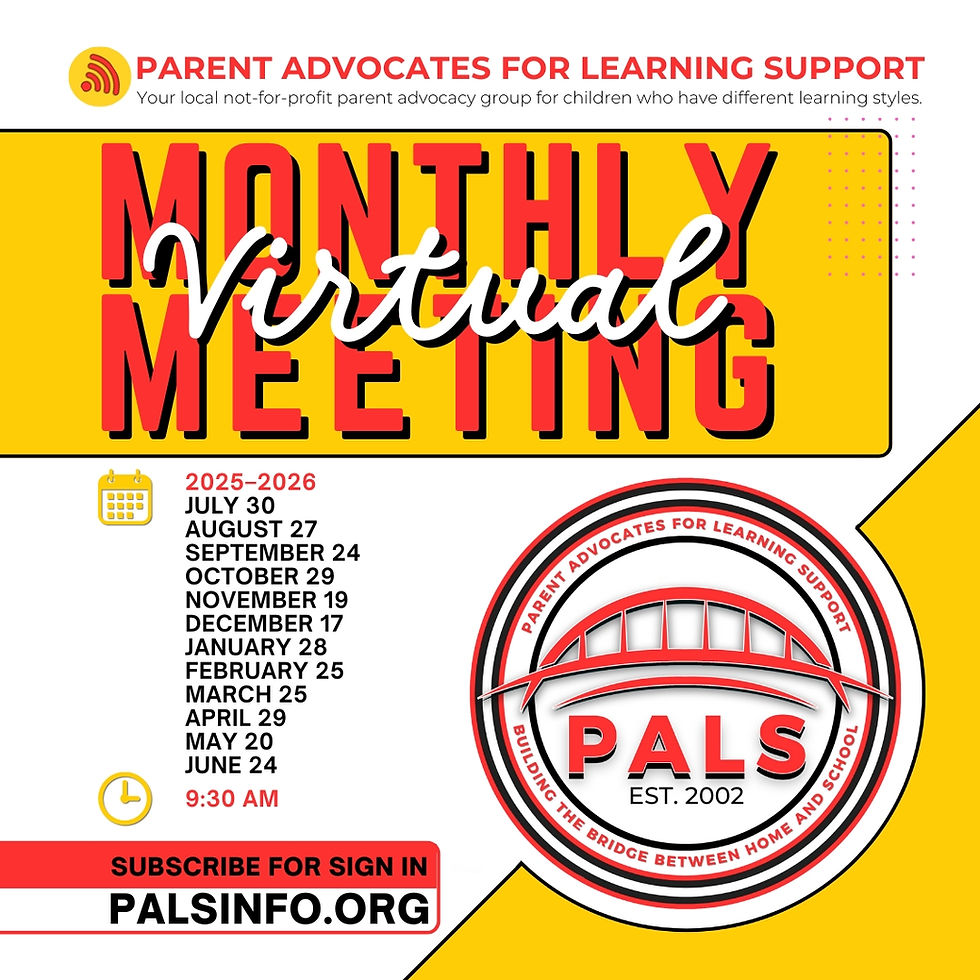
Next Meeting: December 17, 2025 9:30 a.m. Virtual Meeting using Zoom.
Log in for all meetings included in every newsletters. Become a subscriber in the footer.


Comments